We often hear that our DNA is a blueprint, a detailed instruction manual that makes us who we are. This incredible molecule, tucked away inside nearly every cell in your body, holds the secrets to your eye color, your height, and even your predisposition to certain talents or health conditions. Scientists have spent decades mapping this blueprint, and the result, the Human Genome Project, was one of the most ambitious scientific undertakings in history. It was like finishing a colossal jigsaw puzzle, one with over three billion tiny pieces.
But here is where the story gets really interesting. When the final piece of that puzzle was laid down, the researchers made a startling discovery. The manual wasn’t entirely clear. In fact, large sections of it were written in a language they didn’t fully understand. They found that a surprisingly small part of our DNA is dedicated to the genes we all know about—the ones that code for proteins and do the obvious work of building and maintaining our bodies. The rest, a vast and mysterious landscape, was something else entirely.
This leads us to a fascinating question that biologists are still working to answer: If our DNA is a blueprint for life, why is so much of it filled with strange, unknown sequences that seem to do nothing at all? What are these mysterious sections, and are they really as useless as they first appear?
What is our DNA, really?
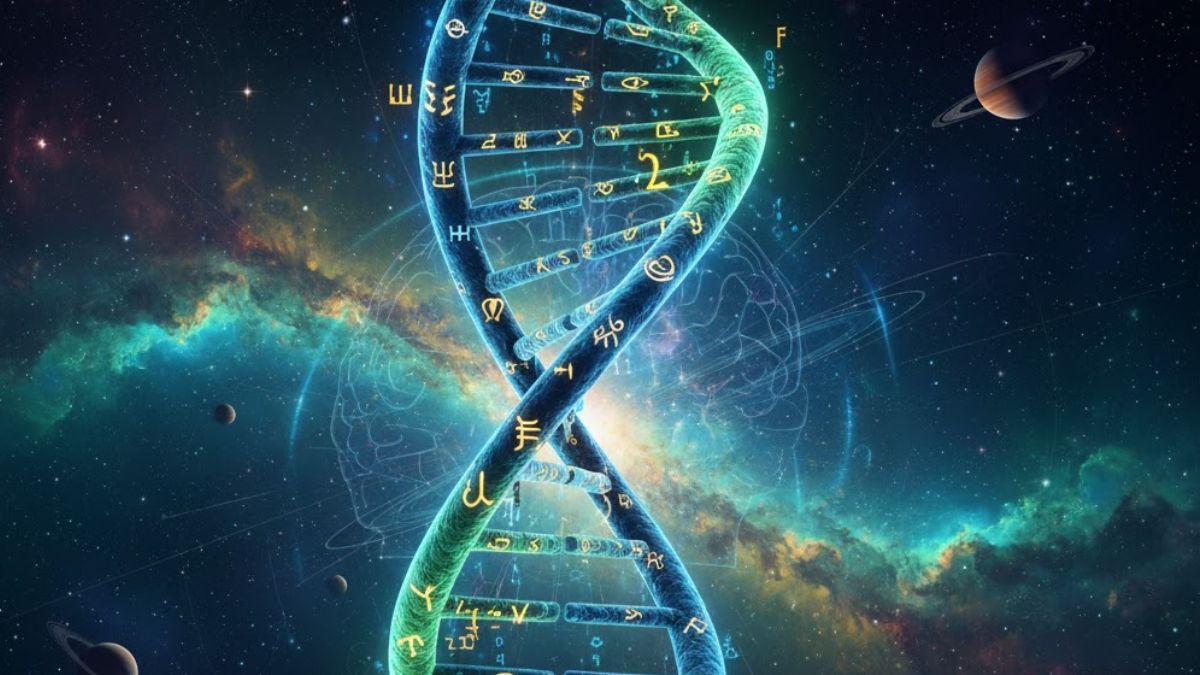
To understand the mystery, we first need to appreciate what DNA is. Think of your body as a incredibly complex and bustling city. This city needs constant instructions to function: how to build new buildings, how to repair roads, when to turn the streetlights on and off. Your DNA is the central command center for this entire operation. It is a long, twisted molecule that looks like a spiraling ladder, and it holds all the information needed to build and run the human body.
This command center is written using a very simple code made of just four chemical letters: A, T, C, and G. The specific order of these letters spells out all the commands. A gene is a specific stretch of these letters that holds the recipe to make a protein. Proteins are the worker molecules; they build your hair, digest your food, fight off infections, and carry oxygen in your blood. For a long time, scientists thought that most of our DNA was made up of these protein-coding genes. They were the star players, and everything else was considered unimportant background noise.
But as we looked closer, we realized something incredible. The protein-coding genes, the ones that seem to do all the important work, make up only about 1-2% of your entire DNA. That is like having a hundred-page manual where only the first one or two pages contain the actual instructions you can read. The other ninety-eight pages are filled with text that seems, at first glance, to be random, repetitive, and nonsensical. This is the great mystery of our genome. Why would we carry around so much genetic material that appears to be junk?
What is this “dark matter” in our DNA?
When scientists discovered that most of our genome isn’t coding for proteins, they initially called it “junk DNA.” The name stuck for a while because it seemed like an accurate description. It was as if the genome was a hard drive cluttered with old, useless files, corrupted data, and endless strings of repetitive code left over from ancient computer viruses. The thinking was that it was just evolutionary baggage, stuff that wasn’t harmful enough to get rid of, so it just accumulated over millions of years.
But the term “junk” is falling out of favor. You do not carry billions of letters of useless information in every single cell if it is truly worthless. That would be a huge waste of energy for your body. Today, scientists prefer a more intriguing name: the “dark matter” of the genome. In space, dark matter is an invisible substance that we cannot see, but we know it’s there because of its powerful gravitational effects on galaxies. Similarly, the dark matter in our DNA is mostly invisible to our traditional understanding of genes, but we are starting to see its effects.
This unknown territory is not just one thing. It is a wild mix of different elements. There are long, repetitive sequences that look like a keyboard smash (like “CGCGCGCG” repeated for pages). There are the decaying remains of ancient viruses that infected our ancestors and got stuck in our DNA. There are sequences that can copy and paste themselves all over the genome. The big question is no longer “Why is this junk here?” but “What is all this dark matter actually doing?”
Could it be left over from ancient viruses?
One of the most mind-bending discoveries about our genome is that a significant portion of our DNA—as much as 8%—comes from ancient viruses. Millions of years ago, viruses infected our distant ancestors. Some of these viruses had a sneaky trick. Instead of just making copies of themselves and moving on, they inserted their own genetic code directly into the DNA of the sperm or egg cells. This meant the viral code was passed down, not just to one person, but to all their descendants, forever.
Over generations, these viral sequences mutated. They lost their ability to create a functioning virus, but they stayed right where they were, nestled in our DNA. They are like fossilized footprints of ancient plagues, a permanent record of the battles our ancestors’ immune systems fought and won. For a long time, we thought these viral fossils were completely silent and inactive. But we are learning that is not the whole story.
Some of these viral sequences have been co-opted by our own bodies and put to work. In fact, a viral gene is crucial for the formation of the placenta in all mammals. The very structure that allows a fetus to connect to its mother and receive nourishment originated from an ancient virus. So, what was once a threat to our ancestors’ lives has become essential for our own. This shows that the unknown sequences in our DNA are not just useless junk; some have been repurposed into vital tools for human life.
Are these unknown sequences actually controlling our genes?
If only 2% of our DNA is the blueprint for the workers (the proteins), what is the other 98% doing? A huge part of it appears to be the management. Imagine a factory floor. The workers on the assembly line are the proteins, doing the hands-on work. But behind a glass window, there is a team of managers. These managers do not build anything themselves, but they tell the workers what to do. They shout, “Start building!” “Work faster!” “Stop production on that item!”
A vast amount of the unknown DNA acts as this management team. These sections are called regulatory sequences. They are not genes, but they control the genes. They decide which gene gets turned on, in which cell, at what time, and for how long. This is incredibly important. You do not want the gene for stomach acid to be active in your eyeball cells. These regulatory switches ensure that every cell in your body, despite having the exact same DNA, knows its specific job.
When these control sequences get messed up, it can cause serious problems, like cancer or other diseases. So, a huge portion of the DNA we once called “junk” is actually a sophisticated control panel, fine-tuning the activity of our genes with incredible precision. Without this dark matter, the genes would be like workers without a foreman, leading to cellular chaos.
Why do we have so much “junk” if we do not use it?
This is a fundamental question. If we do not have a direct, immediate use for every single letter in our DNA, why does our body go through the energy-intensive process of copying it all every time a cell divides? One reason is that not all of it needs to have a direct function to be useful. Some of it might provide a structural purpose, helping to keep the DNA molecule properly packaged inside the cell’s nucleus.
Another idea is that this non-coding DNA acts as a buffer against mutations. A mutation is a random typo in the genetic code. If all of our DNA was critical, life-or-death information, then any random typo could be catastrophic. But if mutations happen in the vast, non-coding regions, they are much less likely to cause a problem. It is like making a typo in the appendix of a book instead of in the central plot. The junk DNA, therefore, might be a protective cushion, absorbing genetic damage so the important genes stay safe.
Furthermore, this vast genetic landscape is a playground for evolution. It is a reservoir of raw material. Over millions of years, random sequences in these junk regions can, by pure chance, be mutated into something useful—a new gene or a new regulatory switch. What is useless today might become the foundation for a new evolutionary advantage tomorrow. Our genome is not a perfectly polished machine; it is a living, historical document, filled with drafts, notes, and ideas for the future.
How much of our DNA is truly unique to us?
When we look at the entire human genome, it is a humbling experience. About 99.9% of your DNA is identical to every other person on the planet. The things that make you unique—your hair texture, your facial features, your susceptibility to certain diseases—all come from tiny variations in just 0.1% of your DNA. But what about the rest? Is it uniquely human?
Not at all. We share a staggering amount of our DNA with other living things. We share about 98-99% of our DNA with our closest relatives, chimpanzees. But the surprises do not stop there. We share about 85% of our DNA with mice. We even share around 50% of our DNA with bananas! This is because the basic machinery of life—the code for how a cell functions, how it uses energy, how it divides—was worked out billions of years ago in a common ancestor.
The unknown sequences in our DNA are often the most conserved parts, meaning they have stayed the same across eons of evolution. If a sequence has remained unchanged from fish to humans, it is a strong clue that it must be doing something very important, even if we do not yet know what that is. So, the mystery sequences are not just a human puzzle; they are a puzzle connecting us to all life on Earth.
Will we ever fully understand our own blueprint?
The journey to understand the human genome is far from over. Finishing the first human genome was a monumental achievement, but it was like getting the first rough map of a new continent. We knew the coastlines and the major mountain ranges, but we had no idea what was in the deep forests, the hidden valleys, or the vast deserts. New projects are now underway to create a truly complete, end-to-end map of the human genome, filling in the last gaps and clarifying the most confusing regions.
This work is like using a higher-resolution telescope to look at the stars. We are starting to see details we never knew existed. We are discovering that the “junk” is teeming with activity. It is transcribed into various kinds of RNA molecules that don’t make proteins but have other regulatory jobs. It influences how our chromosomes are folded. It is a dynamic and essential part of our biology.
The more we learn, the more we realize how little we truly know. The unknown sequences in our DNA are a reminder that our bodies are not just simple machines with a clean, easy-to-read manual. They are complex, historical ecosystems, shaped by millions of years of evolution, conflict, and cooperation. The mystery is what makes the exploration so exciting.
Conclusion
Our DNA is so much more than a collection of genes for making proteins. It is a rich, complex, and somewhat messy tapestry woven from our deepest evolutionary history. The unknown sequences, once dismissed as meaningless junk, are now revealing themselves to be crucial managers, protective buffers, and historical archives. They contain the ghosts of ancient viruses that have become essential for our survival and the control switches that guide our development from a single cell into a complex human being.
The next time you think about what makes you, you, remember that your identity is written not just in the clear, well-understood words of genes, but also in the mysterious, silent language of the genome’s dark matter. This hidden world within us is a frontier of science that is just beginning to be explored. Who knows what other secrets we will find hidden in the code of life?
Do you think the mystery of our DNA will ever be completely solved, or is its complexity too great for us to ever fully unravel?
FAQs – People Also Ask
1. What is the main function of DNA?
DNA’s main function is to store and transmit the genetic instructions needed for a living organism to grow, develop, survive, and reproduce. It does this by providing the code to build proteins, which are the molecules that carry out almost all the jobs in a cell.
2. How much of human DNA is actually functional?
This is a topic of debate among scientists. While only about 1-2% of our DNA codes for proteins, a much larger portion—estimates range from 20% to 80%—is thought to have some kind of function, such as regulating gene activity or maintaining chromosome structure. The definition of “functional” is constantly evolving as we learn more.
3. Why is human DNA compared to a blueprint?
DNA is called a blueprint because it contains all the original, master instructions for building and operating an organism. Just like a blueprint for a house has all the details for its structure and systems, DNA has the information for an organism’s physical structure and biological processes.
4. Can we change our DNA?
For the most part, the DNA in your body’s cells is fixed and cannot be changed by lifestyle choices. However, groundbreaking technologies like CRISPR allow scientists to edit DNA sequences in a lab setting, offering potential cures for genetic diseases, but this is still an emerging and complex field.
5. What is the difference between DNA and a gene?
DNA is the entire molecule that holds all the genetic information. A gene is one specific segment of that DNA molecule. Think of DNA as the entire book of instructions, and a gene as one single recipe within that book.
6. How does DNA get passed from parents to children?
Children inherit half of their DNA from their biological mother and half from their biological father. This happens when the sperm and egg cells, which each contain only half a set of DNA, combine at conception to form a full, unique set of DNA for the new individual.
7. What are the four bases of DNA?
The four chemical bases, or “letters,” that make up the DNA code are Adenine (A), Thymine (T), Cytosine (C), and Guanine (G). They always pair in a specific way: A with T, and C with G, forming the rungs of the DNA ladder.
8. How long is the DNA in one human cell?
If you could stretch out the DNA from a single human cell, it would be about two meters (six feet) long. Since your body has trillions of cells, the total length of all your DNA combined would be long enough to stretch from the Earth to the Sun and back many times over.
9. What is the Human Genome Project?
The Human Genome Project was an international scientific research project that successfully mapped and sequenced almost all of the human genome. It provided the first-ever complete readout of the three billion letters that make up human DNA, creating a foundation for all modern genetics research.
10. Do all humans have the same DNA?
All humans are 99.9% genetically identical. It is the tiny 0.1% difference in our DNA sequences that accounts for all the variation in our physical appearance, personality, and health. This includes differences in eye color, blood type, and susceptibility to diseases.
