
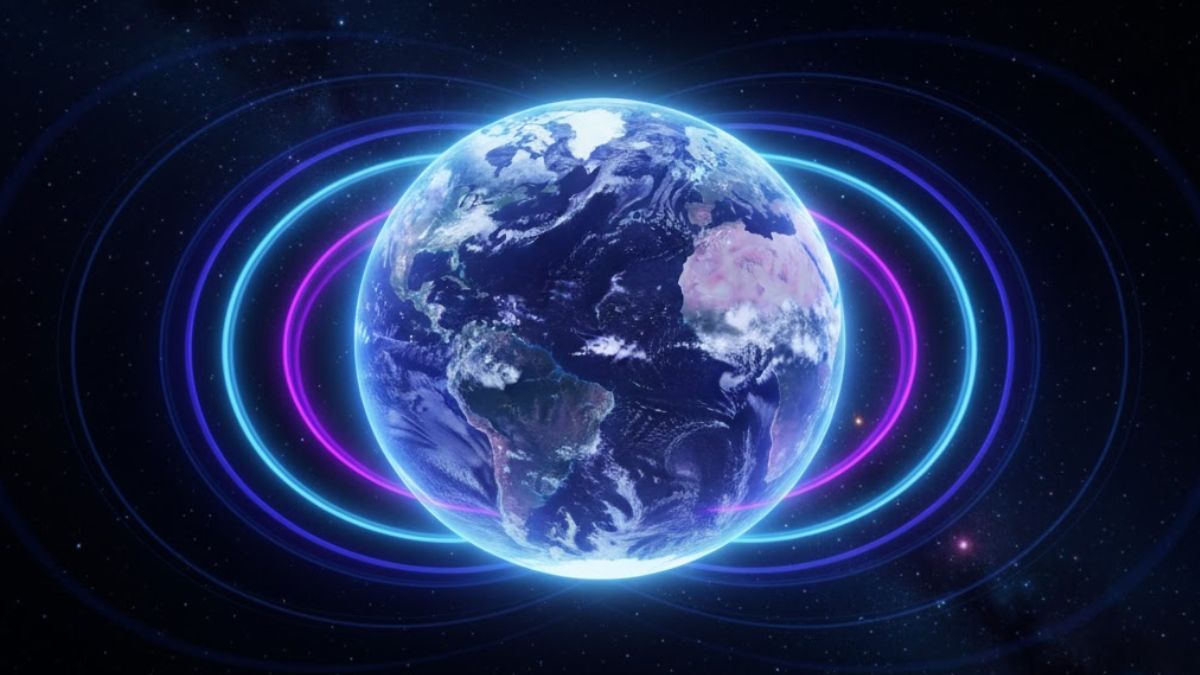
There’s a sound that fills the air around us, a deep and steady rhythm that has been playing since long before humans walked the Earth. It’s not the wind whistling through the trees or the crash of ocean waves. This sound is something far more fundamental, a vibration coming from the planet itself. It’s so low and powerful that our ears cannot hear it. It’s the Earth’s mysterious hum.
For centuries, if anyone had suggested the ground beneath our feet was producing a constant, inaudible song, they might not have been taken seriously. How could something as solid and silent as the Earth make a noise? But science has revealed that our world is not the quiet, still place it seems. It is a dynamic, living system, and this hum is one of its most basic expressions. It’s a low-frequency sound that travels through the ground and the oceans, a secret tune waiting to be decoded.
This isn’t a sound you can record with a regular microphone. Scientists needed incredibly sensitive instruments to finally detect this global phenomenon. Discovering it was like finding out your quiet, steady house is actually gently breathing. What could possibly be causing our entire planet to emit such a persistent, low-frequency vibration? The answer is as fascinating as the question itself, pulling together the forces of the sea, the sky, and the very ground we stand on.
What Exactly is This Mysterious “Hum”?
When we talk about the Earth’s hum, we have to forget everything we know about everyday sounds. This isn’t a high-pitched whistle or a mid-range rumble like thunder. This is a sound so deep and slow that it exists at the very bottom range of what sound can be. Its frequency is thousands of times lower than the lowest note a piano can play. If you could speed it up a thousand times, it might sound like a low, steady drone.
The hum is not a recent discovery, but confirming its source has been a long scientific journey. It was first predicted in the late 1950s, but it took until the late 1990s for researchers to have the right tools to clearly observe it. They used special devices called seismometers, which are normally used to detect the violent shaking of earthquakes. But by carefully filtering out all the big, noisy events, they found a constant, gentle signal that never goes away.
This signal is the planet’s background music. It’s present everywhere, from the deepest ocean trenches to the highest mountain peaks, though its strength can vary from place to place. It’s the sound of the Earth when it is, for all practical purposes, being still. It’s the baseline vibration of our world. So, if it’s not from earthquakes or human activity, where is this endless energy coming from? The source turns out to be something we can all see, but might never have guessed.
Where is This Strange Sound Coming From?
For a long time, the origin of the Earth’s hum was a real puzzle. Scientists had a few theories. Some thought it might be caused by the atmosphere, with winds pushing against the planet’s surface. Others wondered if it was the leftover energy from countless earthquakes around the world, constantly ringing the planet like a bell. While big quakes can make the Earth “ring” for days or even weeks, they don’t explain a sound that never, ever stops.
The most compelling answer, which has gained a lot of support from research, points to our oceans. Imagine the world’s oceans as a giant, never-ending bath. Now, imagine constantly sloshing the water in that bath. That’s essentially what happens on a global scale. Giant storm systems far out at sea create powerful waves. These waves don’t just travel on the surface; their energy goes all the way down to the ocean floor.
When these powerful ocean waves collide with each other or crash into continental shelves and seafloor slopes, they create a steady, rhythmic push against the solid Earth. This push isn’t a single, powerful punch. It’s a countless number of tiny pushes happening all the time, all over the world. Think of it like a crowd of people gently but constantly pressing their hands against a massive wall. Individually, each push is small. But together, they create a continuous pressure that makes the entire structure vibrate. This is the primary engine of the Earth’s hum—the eternal dance of the ocean with the land.
How Do Scientists Listen to a Sound They Can’t Hear?
You might be wondering how it’s possible to study a sound that is completely inaudible to the human ear. Scientists can’t just put on a pair of headphones and listen for it. They have to “listen” in a different way, by measuring vibrations. The key tools for this job are seismometers. These are incredibly sensitive instruments buried in the ground or placed on the ocean floor to measure the slightest movements of the Earth.
During a large earthquake, a seismometer’s needle goes wild, drawing huge, jagged lines. The Earth’s hum, in contrast, creates a barely noticeable, gentle wobble in the data. For decades, this signal was lost in the noise. It was like trying to hear someone whisper in the middle of a rock concert. Only after scientists developed ways to remove the “loud” signals from earthquakes and human activity could they see the consistent, gentle pattern of the hum.
Another method involves measuring the hum from the ocean itself. Special instruments placed on the seafloor can detect the tiny changes in pressure caused by these deep vibrations. By combining data from seismometers on land and sensors in the oceans from all around the globe, researchers can build a clear picture of this global phenomenon. They can even create maps showing where the hum is strongest, which is often in areas with stormy seas and rugged coastlines.
Is the Hum Just a Scientific Curiosity, or is it Useful?
Learning about the Earth’s hum isn’t just about satisfying our curiosity. This constant vibration has some very practical and exciting applications, especially in the field of geology. One of the biggest challenges in studying the Earth’s interior is that we can’t dig down very far. The deepest hole ever drilled is only about 12 kilometers deep, which is just a tiny scratch on the surface of our planet, which has a radius of over 6,300 kilometers.
To see deeper, scientists use seismic waves from earthquakes. Just like a doctor uses an ultrasound to see inside a patient, geologists use earthquake waves to create images of the Earth’s inner layers. The problem is, earthquakes are unpredictable and don’t happen everywhere. They provide a detailed picture, but only in certain places and at certain times.
The Earth’s hum, however, is always on. It acts like a constant, low-power ultrasound for the entire planet. By studying how the hum’s vibrations travel through the Earth, scientists can learn about the structure of the crust and the upper mantle in areas that are seismically quiet. It gives them a steady stream of data to understand the makeup of our planet in places that don’t get many earthquakes. This helps us build a more complete and continuous model of what’s going on beneath our feet.
Could This Hum Affect Animals or Even People?
This is a question that often comes up. We are surrounded by this vibration, so does it have any effect on us? The simple answer is, there is no evidence that the Earth’s hum has any physical or psychological impact on humans or animals. The vibrations are incredibly faint. They are far, far weaker than the vibrations you feel when a large truck drives by your house or when you walk across a room.
Our bodies are simply not built to detect something so subtle. Some animals, like elephants, are known to communicate using low-frequency sounds that travel long distances through the ground. However, the Earth’s hum is on a different scale altogether—it’s more of a steady-state background vibration than a communicative signal. It is the planet’s most gentle and natural state, a fundamental part of our world that life has evolved alongside for billions of years. It’s not something to be concerned about, but rather something to marvel at.
Does the Hum Mean the Earth is “Alive”?
In a poetic sense, the hum absolutely adds to the feeling that our planet is a living, breathing entity. It’s a constant reminder that the Earth is not a dead rock floating in space, but a complex system full of energy and motion. The hum connects the atmosphere, the oceans, and the solid ground in a single, vibrating system. It shows that even on a calm, sunny day with no earthquakes, our planet is still actively pulsing with energy.
This doesn’t mean the Earth is a conscious being, of course. But it does mean it is dynamically active in ways we are only beginning to understand. The hum is the planet’s heartbeat, a slow and steady rhythm driven by the sun’s energy fueling our weather systems and the gravitational pull of the moon creating the tides. It is the sound of a world that is very much alive in a geological sense, constantly humming its quiet, ancient song.
Conclusion
The mysterious low-frequency hum of the Earth is a beautiful example of how much we still have to learn about our own planet. It’s a hidden layer of its existence, a deep and steady vibration born from the power of the oceans and the solidity of the land. From a scientific mystery to a valuable tool for peering into the Earth’s interior, this hum has proven to be one of the most fascinating natural phenomena we’ve discovered.
It reminds us that there is a whole world of activity happening just beyond the reach of our senses. The ground we think of as so stable and silent is actually subtly vibrating to the rhythm of the seas. It’s a connection to the fundamental forces that shape our world, a quiet music that has been playing for billions of years and will continue long after we are gone. If you could feel this gentle pulse of the planet, what do you think it would tell you about the hidden life of the world you call home?
FAQs – People Also Ask
1. Can humans hear the Earth’s hum?
No, the Earth’s hum exists at a frequency that is far too low for the human ear to detect. Our hearing range is simply not built to pick up these incredibly deep and powerful vibrations.
2. Is the Earth’s hum related to earthquakes?
While large earthquakes can make the Earth ring like a bell, the constant background hum is not caused by them. The primary cause is believed to be the pressure from ocean waves on the seafloor.
3. How was the Earth’s hum discovered?
Scientists discovered the hum in the late 1990s by using highly sensitive seismometers. They carefully filtered out all the signals from earthquakes and other noise, revealing a constant, low-frequency signal that was always present.
4. Is the hum the same everywhere on Earth?
No, the strength of the hum varies across the globe. It is generally stronger in places with intense ocean storms and rough seas, such as the Pacific Ocean, and weaker in calmer areas and over continents.
5. Could the hum ever stop?
The hum is generated by the interaction of the oceans and the Earth’s crust. For it to stop, the world’s oceans would have to become completely still, which is impossible as long as the wind blows and the moon’s gravity creates tides.
6. Do other planets have a similar hum?
Scientists believe it is possible. For a planet to have a hum, it would likely need a large, active fluid layer (like an ocean or a dense atmosphere) interacting with a solid surface. Studying other planets for such signals is very challenging with current technology.
7. Does the hum change with the seasons?
Yes, research has shown that the hum can get slightly stronger during the winter months in each hemisphere. This is because winter storms in the oceans are more powerful, creating bigger waves that push against the seafloor with more force.
8. How deep does the hum go into the Earth?
The vibrations from the hum travel deep into the Earth, potentially reaching dozens or even hundreds of kilometers into the outer layer of the planet, known as the crust and upper mantle.
9. Can animals hear the Earth’s hum?
There is no evidence that any animals can hear or sense the Earth’s hum. While some animals use low-frequency sounds, the hum is an extremely subtle global vibration that is not known to be detectable by any species.
10. Why is studying the hum important?
Studying the hum is important because it provides a constant source of seismic waves. Scientists can use these waves to create images of the Earth’s interior structure in areas where earthquakes are rare, helping us understand our planet better.
