
 By SAJID ali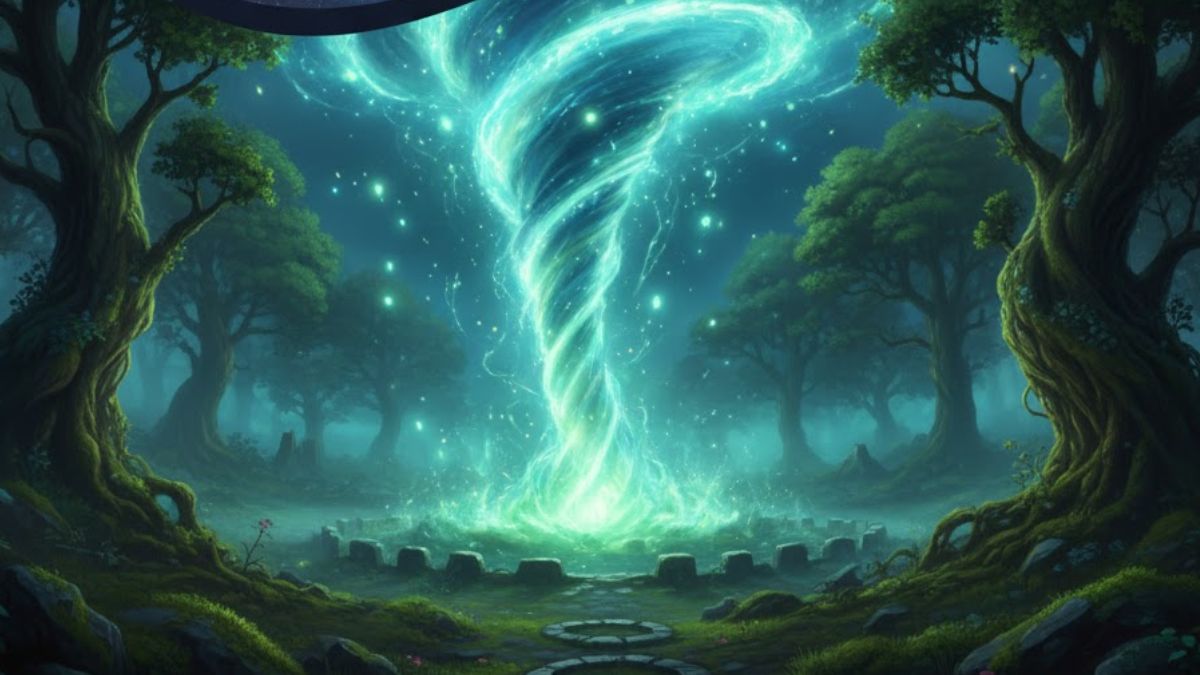
There’s a strange and beautiful spot in the Arizona desert known as Sedona. People from all over the world travel there, not just for the stunning red rocks, but for a feeling. They talk about certain places where the air seems to hum, where a sense of deep peace or sudden clarity washes over them. They call these spots “energy vortexes.” For a long time, this idea was left to spiritual seekers and travel guides. It sounded like magic, something science couldn’t touch.
But what if there was more to it? What if these feelings, these reported sensations, aren’t just in people’s heads? What if they are the human body’s subtle way of responding to something real happening in the ground beneath our feet? This idea pushes us to look closer, to see if the mysterious concept of an energy vortex could have a foundation in the physical world.
Could it be that the ancient rocks, the shifting magnetic fields, and the very pressure of the Earth itself are creating places that feel different? This isn’t about proving or disproosing anyone’s spiritual experience. It’s about asking a simple, fascinating question: Is there a geological reason why some places on Earth just feel special?
When people talk about an energy vortex, they often describe it as a specific location where the Earth’s energy is especially strong, concentrated, and swirling. Think of it not like a magical whirlwind you can see, but more like an invisible hotspot. Many who visit these sites report physical sensations—a tingling on their skin, a feeling of being lighter or heavier, or a deep sense of emotional calm or upliftment.
Traditionally, these spots are often linked to spiritual practices. Ancient cultures frequently built temples, stone circles, or sacred fires on locations that modern visitors now call vortexes. It seems our ancestors felt something there, too, long before the term was ever used. They might have called them sacred lands or places where the spirits dwell.
For us to explore this as a geological possibility, we need to translate this idea of “energy” into something science can measure and observe. We’re not talking about a mystical, unknown force, but about the natural energies that our planet is constantly giving off. This includes things like the Earth’s magnetic field, vibrations from deep underground, and even the gentle flow of radioactive gases seeping up from the bedrock. So, when we ask if vortexes are real, we’re really asking if the geology of a place can amplify these natural energies in a way that a human being might notice.
Our entire planet is wrapped in a giant magnetic field. It’s the reason a compass needle points north. This field is created by the movement of molten iron in the Earth’s core, and it’s not perfectly smooth. It has dips, wrinkles, and variations, much like a landscape has hills and valleys. Scientists can map these variations with sensitive instruments.
In some places, due to the unique composition of the rocks, this magnetic field can be stronger or weaker, or even twisted. Large deposits of iron-rich rock, like the magnetite found in Sedona’s famous red sandstone, can locally bend the Earth’s magnetic field. What if you were standing directly over one of these subtle magnetic “hills”?
We know that many animals navigate using the Earth’s magnetic field. Birds, sea turtles, and even bacteria have a built-in magnetic sense. While humans don’t have a conscious sense of direction as strong as a bird’s, our bodies are still complex biological systems that run on tiny electrical impulses. It’s not a huge leap to think that a strong, localized magnetic variation could subtly influence our brainwaves, our nervous system, or our biochemistry. This influence might be what some people perceive as a “energy”—a slight shift in their internal state caused by an external, physical force.
Beyond magnetism, the ground itself is alive with movement and emission. This brings us to two powerful geological concepts: piezoelectricity and radon gas.
First, let’s talk about pressure. Certain types of crystals, like quartz, are incredibly common in the Earth’s crust, especially in places like Sedona. When these quartz crystals are put under immense pressure—like the tectonic pressure from shifting continents, or even the more minor pressure from the weight of massive rock formations—they generate a tiny electrical charge. This is called the piezoelectric effect. It’s a real, measurable scientific phenomenon. In a landscape full of quartz and under constant geological stress, could the ground be producing a faint, constant hum of piezoelectric energy? It’s possible that in specific spots where the rock formations and stress points align, this energy is more concentrated.
Secondly, there is the very slow and natural release of radioactive gases from the Earth. Radon gas is produced from the decay of uranium, which is found in small amounts in most rocks. It seeps up from the ground and is usually harmless in open, ventilated areas. However, its release can be higher in places with specific geological faults and fractures. Some researchers have speculated that very low levels of radioactive emissions could slightly stimulate the human body’s systems. It’s a controversial idea, but it raises the question: could the faint, natural radiation from the rocks be another piece of the puzzle?
If you look at a map of many famous vortex sites, you’ll often find they are located near geological faults or underground waterways. A fault is essentially a large crack in the Earth’s crust where two blocks of rock have moved past each other. These faults can act like channels, allowing groundwater to flow and gases from deep within the Earth to rise to the surface more easily.
The movement of water, especially vast amounts of it flowing deep underground through rock, can create its own electrical charge through a process called electro-filtration. As water forces its way through tiny pores in the rock, it can separate electrical charges, generating a current. Furthermore, the stress and grinding of rocks along a fault line is a major source of the piezoelectric effect we discussed.
So, a geological fault could be a natural “power line.” It might concentrate magnetic anomalies, piezoelectric charges, and gaseous emissions all in one place. When a spiritual vortex site overlaps with a known geological fault, it’s hard to ignore the potential connection. The Earth isn’t just a solid, silent ball; it’s a dynamic system with fluid moving through cracks and energy being released along its weak points.
This is the most important question, and a fair one. The power of suggestion is incredibly strong. If you travel to a beautiful place like Sedona, having read about the vortexes and expecting to feel something, your brain is very likely to oblige. This is known as the placebo effect, and it’s a real and powerful psychological phenomenon.
Our minds are deeply influenced by our surroundings. The awe we feel looking at a majestic, towering red rock formation can trigger genuine psychological and physiological changes—a slower heart rate, a sense of wonder, a feeling of being small in a vast world. This is sometimes called the “cathedral effect.” So, is the vortex experience just the combination of stunning beauty and a powerful expectation?
Probably not entirely. The most compelling idea is that it’s a combination of both. The breathtaking scenery sets the stage and opens your mind. Then, the subtle but real geological energies—the magnetic fields, the piezoelectric charge, the whispering currents from underground water—work on your body at a level below your conscious awareness. Your brain receives this unusual data from its environment and tries to make sense of it, translating it into a feeling of peace, energy, or connection. The geology provides the physical trigger, and the mind creates the personal, meaningful experience.
The idea of energy vortexes sits in a fascinating space between proven science and personal experience. While we may never have a “Vortex Detector” that beeps loudly at a sacred site, the geological evidence is too intriguing to dismiss. The combination of magnetic rocks, piezoelectric quartz, flowing groundwater, and deep earth faults creates a recipe for places that are physically different from their surroundings.
These differences are subtle, measurable in a lab but often only felt by humans as a vague sensation. It seems that the magic of these places isn’t necessarily a supernatural force, but a super-natural one—an amplification of the very real, dynamic, and energetic nature of our living planet. The Earth is not a passive stage for our lives; it is an active participant, and in certain special spots, it might just be whispering a little louder.
So, the next time you stand in a place that feels uniquely calm or energizing, consider the possibility that you are not just imagining it. You might be standing directly over one of the Earth’s own, natural power spots, a place where the geology beneath your feet is quietly speaking to the biology within you.
What do you think you would feel if you visited a place like Sedona, knowing what you know now?
1. What is the most famous energy vortex in the world?
Sedona, Arizona, is arguably the most famous location for energy vortexes. Its stunning red rock formations, like Bell Rock and Airport Mesa, are widely believed to be powerful centers of Earth’s energy, drawing millions of visitors seeking spiritual and wellness experiences.
2. Are energy vortexes considered pseudoscience?
Yes, by the mainstream scientific community, the concept of energy vortexes as spiritual centers is considered pseudoscience. However, the geological phenomena associated with these sites, like magnetic anomalies and fault lines, are very real and actively studied.
3. How can you find an energy vortex?
People often report finding vortexes by noticing a personal feeling of energy, peace, or inspiration in a specific spot. Dowsing rods or pendulums are sometimes used, though these methods are not scientifically verified. Many known sites are marked by local guides or have a long history of being considered sacred.
4. What does it feel like to be in an energy vortex?
Experiences vary greatly from person to person. Common reports include a slight tingling sensation on the skin, a feeling of physical lightness or heaviness, a sense of deep calm and peace, or sudden emotional clarity and upliftment.
5. Do energy vortexes have any physical effects on objects?
There are anecdotal claims of vortexes affecting electronic devices like cameras or causing compass needles to behave erratically, which could theoretically be linked to strong local magnetic fields. However, these effects are not consistently documented in a scientific setting.
6. Is there a connection between energy vortexes and ley lines?
Yes, in many spiritual and alternative theories, vortexes are seen as power nodes or points where so-called “ley lines”—hypothetical alignments of ancient and sacred sites—intersect. Like vortexes, the existence of ley lines is not supported by scientific evidence.
7. Can the science of geology explain all vortex sensations?
Not entirely. Geology can explain the potential physical triggers, like magnetic fields or ground emissions. But the final, personal human experience is a complex blend of these subtle environmental factors, psychology, belief, and the power of the surrounding landscape.
8. Are there any dangerous energy vortexes?
Most reported vortexes are described as either positively energizing or calming. Some are labeled “male” or “electric” vortexes, which are said to be more stimulating, but not typically as dangerous. The experience is generally considered subjective and personal.
9. How did ancient cultures know about these sites?
Ancient cultures likely identified these special places through direct observation and sensation, just as some people do today. They may have noticed unusual plant growth, animal behavior, or simply felt a different quality to the land, leading them to build temples and stone circles there.
10. Can you create an energy vortex in your home?
While you can’t replicate the large-scale geology of a place like Sedona, many people believe you can create a focused, peaceful energy in your home through practices like meditation, using crystals, or arranging your space in a way that promotes calmness and positive flow, according to principles like Feng Shui.