
 By SAJID ali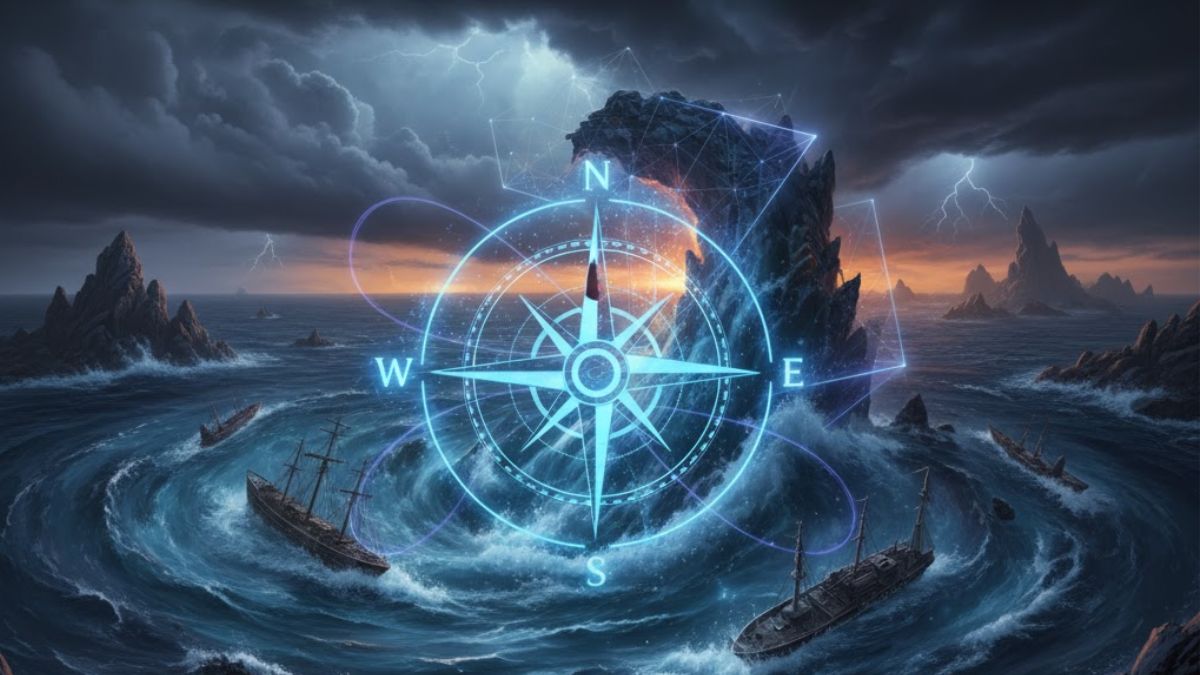
For decades, a patch of ocean between Miami, Puerto Rico, and Bermuda has been the star of countless documentaries, books, and late-night conversations. It’s a place where planes and ships seem to vanish without a trace, leaving behind no debris, no distress calls, and a mountain of unanswered questions. This is the Bermuda Triangle, a modern mystery that has stubbornly refused to be solved.
We all love a good mystery, and the Bermuda Triangle is one of the biggest. The stories are chilling. Flight 19, a squadron of five U.S. Navy bombers, disappears on a routine training mission in 1945. A massive search plane sent to find them also vanishes. Freighters and pleasure yachts are reported to be in calm seas one moment and gone the next. It’s enough to make you believe in something supernatural, isn’t it? Pirates, sea monsters, or even alien abductions are often suggested.
But what if the truth is hidden in something we can’t see, something that is a fundamental force of our planet? What if the real culprit isn’t a creature from the deep, but a strange and invisible quirk in the Earth itself? This leads us to one of the most compelling scientific theories: could the strange events in the Bermuda Triangle be caused by strange magnetic anomalies?
What exactly is a magnetic anomaly, and could it really affect ships and planes?
Before we dive into the science, let’s get a clear picture of what we’re talking about. The Bermuda Triangle isn’t an official location on any map. You won’t find it labeled on a globe in a classroom. Instead, it’s a concept, a region of the western North Atlantic Ocean that people have drawn lines around to explain a series of strange disappearances. The three points that usually define its corners are Miami, Florida; San Juan, Puerto Rico; and the island of Bermuda itself.
The area itself is not particularly unique at first glance. It’s a busy stretch of water with heavy shipping traffic, popular cruise routes, and frequent flight paths. The weather can be tropical and unpredictable, and the ocean floor is a dramatic landscape of deep trenches and strong currents. This is an important point: the Triangle is a naturally challenging place to navigate. Storms can pop up quickly, and the Gulf Stream, a powerful ocean current, can quickly wipe away any evidence of a sunken vessel. So, while the legend suggests a mysterious force is at work, many of the disappearances can be explained by these ordinary, though dangerous, natural hazards. But the legend persists because of a handful of cases that seem to defy any ordinary explanation.
To understand the magnetic anomaly theory, we first need to understand a little bit about the Earth’s magnetism. Think of our planet as a giant magnet, much like the bar magnet you might have played with in school. It has a magnetic North Pole and a magnetic South Pole. This creates a giant, invisible magnetic field that surrounds the entire Earth.
This magnetic field is incredibly important. It protects us from harmful radiation from the sun, and for centuries, it has been our guide. A compass doesn’t actually point to the true North Pole (the geographic top of the world). It points to the magnetic North Pole. Navigators on ships and planes rely on the difference between true north and magnetic north, a calculation called “magnetic variation,” to plot their course correctly. It’s a system that usually works perfectly, but what if the magnetic field in a certain area was… broken?
This is where the Bermuda Triangle theory gets interesting. One of the oldest and most frequently reported oddities in the Triangle is the strange behavior of compasses. Pilots and ship captains have long spoken about their compasses spinning wildly or giving incorrect readings as they passed through this area.
For a long time, people thought this was just a sailor’s tall tale. But science has since provided a possible explanation. There is a documented phenomenon where, in certain parts of the world, the magnetic north and true north actually align. This line is called the “agonic line.” For most of recorded navigation history, the agonic line passed directly through the Bermuda Triangle. This means that in that specific region, a compass would point to both true north and magnetic north simultaneously.
If a navigator wasn’t aware of this and didn’t adjust their calculations, they could end up steering dramatically off course. A mistake of just one degree in navigation can put a ship or plane many miles away from its intended destination over a long journey. In a vast ocean with unpredictable weather, being even slightly off course could lead to running out of fuel or stumbling into a severe storm. So, the compass issues weren’t necessarily a sign of a supernatural force, but rather a tricky navigational hurdle that, if not accounted for, could have tragic consequences.
The compass issue is just one piece of the puzzle. The bigger question scientists are exploring is whether the entire magnetic field in the Bermuda Triangle is unusual. Is it weaker? Is it fluctuating? Some researchers point to a feature called the South Atlantic Anomaly, a vast region where the Earth’s inner Van Allen radiation belt comes closest to the planet’s surface, creating a dip in the magnetic field.
While the main South Atlantic Anomaly is located off the coast of Brazil, some speculate that the Bermuda Triangle could be experiencing a similar, lesser-known magnetic “dent.” If the magnetic field is significantly weaker in this area, it could allow more solar radiation to reach the Earth’s surface. The theory goes that this burst of radiation could, in theory, interfere with the sensitive electronic equipment on modern ships and aircraft. It could cause engine stalls, instrument failure, and communication blackouts.
Imagine you’re flying a plane, and suddenly all your screens go dark and your radios fall silent. At the same time, a natural compass starts to spin, making it impossible to know which way you’re headed. In a stressful situation like that, over a featureless ocean, the chances of a catastrophic error would increase tremendously. This theory doesn’t involve any science-fiction; it’s based on the real, measurable, and sometimes unpredictable behavior of our planet’s magnetic core.
While magnetic anomalies are a fascinating idea, they are far from the only scientific theory. Many experts believe that the combined effect of several natural environmental factors is enough to explain the Triangle’s reputation.
One of the most compelling explanations involves methane gas. Geologists have found evidence of large methane gas deposits trapped in the seabed under the Atlantic. The theory suggests that these deposits can sometimes erupt, sending enormous bubbles of methane gas rushing towards the surface. When this happens, the gas can lower the density of the water so much that a ship would lose its buoyancy and sink almost instantly. Furthermore, if this methane bubble reached the atmosphere, it could theoretically create a highly turbulent patch of air or even cause aircraft engines to stall as they fly through the combustible gas. It’s a dramatic and sudden event that would leave very little evidence behind.
Then there is the weather. The region is known for its sudden and violent storms. These aren’t your average thunderstorms; they can generate massive waves and microbursts of wind that could easily overwhelm a vessel. Additionally, some researchers point to unusual “rogue waves”—gigantic, spontaneous waves that can reach heights of 100 feet, capable of breaking a large ship in two. When you combine these powerful forces of nature with the historical navigational challenges, the Bermuda Triangle starts to look less like a paranormal vortex and more like a perfect storm of natural hazards.
After looking at all the evidence, it seems that the truth about the Bermuda Triangle is probably a mixture of many things. The magnetic anomaly theory is certainly plausible, especially when considering the historical compass problems and the potential for electronic interference. It provides a solid scientific basis for many of the strange stories from the era before advanced GPS navigation.
However, it’s likely not the only cause. The methane gas theory and the region’s notoriously violent weather probably share the blame. The real mystery may not be a single, fantastical force, but rather a combination of rare but perfectly natural events that, when they occur, create the perfect conditions for a tragedy. The legend is fueled by our love for a good story and the fact that the vast, powerful ocean is very good at keeping its secrets.
The ocean is a wilderness, and like any wilderness, it has its more dangerous corners. The Bermuda Triangle sits at the crossroads of busy travel and natural peril. So, while we may have debunked the aliens and sea monsters, the idea that this region has a unique and tricky personality, partly shaped by the invisible forces of magnetism, remains a captivating possibility.
What do you think? If you were a pilot, would knowing about these magnetic quirks make you feel safer, or even more nervous about flying through the Bermuda Triangle?
1. How many ships and planes have disappeared in the Bermuda Triangle?
Estimates vary widely, but over the last century, approximately 50 ships and 20 aircraft are recorded as having been lost under mysterious circumstances in the region. It’s important to note that many organizations, like the U.S. Coast Guard, do not consider the Triangle any more dangerous than other similarly trafficked parts of the ocean.
2. What was the most famous disappearance in the Bermuda Triangle?
The most famous case is undoubtedly Flight 19 in 1945. This was a squadron of five U.S. Navy TBM Avenger bombers on a training flight that vanished entirely. A rescue plane with 13 crew members sent to find them also disappeared, deepening the mystery.
3. Does the U.S. government recognize the Bermuda Triangle as a real danger?
No, official U.S. government bodies like the U.S. Navy and the U.S. Coast Guard do not recognize the Bermuda Triangle as a specific geographic hazard. They attribute the losses to the combination of environmental forces and human error common to any oceanic region.
4. Is it safe to travel through the Bermuda Triangle today?
Yes, it is considered safe. Thousands of ships and aircraft pass through the Bermuda Triangle safely every year without incident. Modern navigation technology like GPS has largely eliminated the historical compass problems that likely contributed to past disasters.
5. Are compasses still affected in the Bermuda Triangle?
The agonic line, where true north and magnetic north align, has shifted over time and is now located elsewhere. While the specific compass issue from the past is less pronounced today, the broader and more complex question of local magnetic anomalies is still a topic of scientific study.
6. What is the methane gas theory?
This theory suggests that large pockets of methane gas trapped under the seabed can erupt. These massive bubbles rising to the surface could reduce water density, causing ships to sink, and if the gas reaches the air, it could potentially cause plane engines to fail.
7. Has any wreckage ever been found from the famous disappearances?
In most of the famous “mystery” cases, very little to no wreckage was ever found. This lack of evidence is a major reason why the legend persists. However, in recent years, wreck-hunting projects have found some aircraft in the area, suggesting that ocean depths and strong currents simply make discovery very difficult.
8. Are there any special rules for sailing or flying through the Bermuda Triangle?
There are no special international rules. However, prudent captains and pilots are always advised to be extra vigilant about weather reports, ensure all navigation and communication equipment is functioning, and file detailed travel plans, which is standard good practice for any ocean crossing.
9. Does the Bermuda Triangle have unusually bad weather?
The region is prone to sudden and severe tropical storms and hurricanes. The powerful Gulf Stream current can also quickly change local sea conditions, making weather unpredictable and dangerous for small to medium-sized vessels.
10. Why is the Bermuda Triangle such a popular mystery?
The mystery taps into our fundamental fear of the unknown and the powerful, unexplored nature of the deep ocean. The lack of clear answers for a few high-profile cases provides a perfect blank canvas for imagination, allowing for stories of aliens, time warps, and ancient curses to flourish.