
 By SAJID ali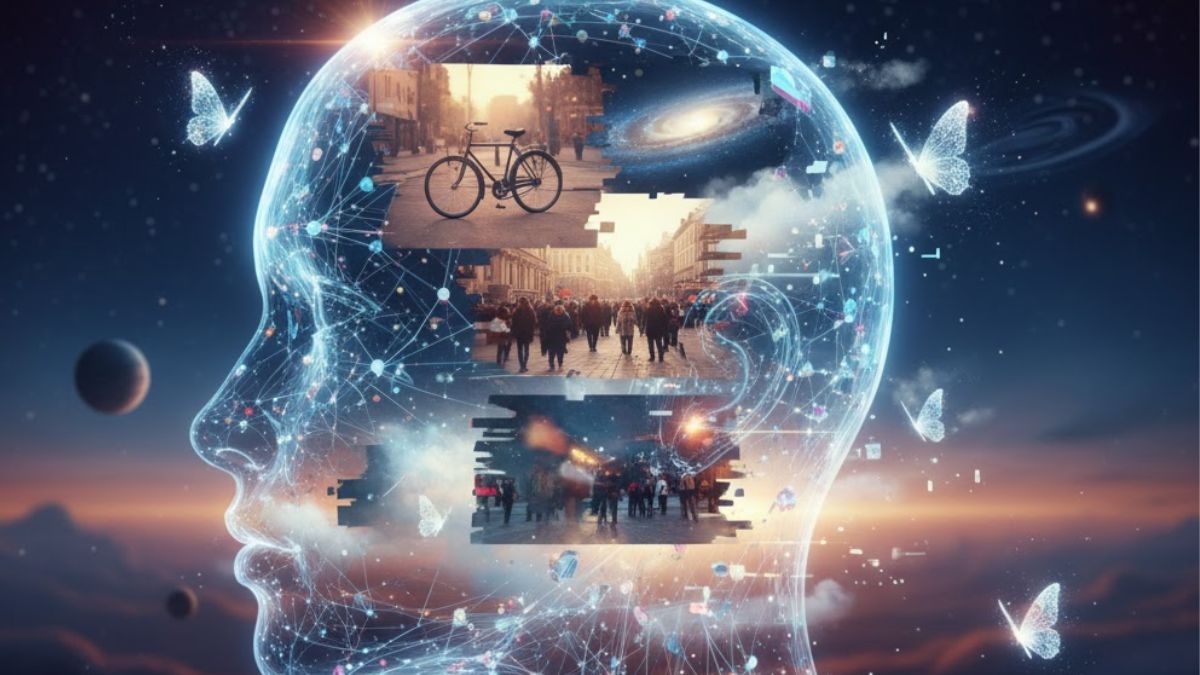
You’re sitting with your family, and a story from years ago comes up. You remember it perfectly—the details, the sounds, even the weather. But then your sister looks at you, confused. “That’s not how it happened at all,” she says. In fact, she insists you weren’t even there. You feel a sudden, strange confusion. Your memory feels so real, so vivid. How could it be wrong?
This experience is more common than you might think. It’s not about having a “bad memory” or making things up. Sometimes, our brains can create full, detailed memories of events that we never actually lived through. These are called false memories, and they are a normal quirk of how our minds work. Our brains aren’t video recorders, faithfully capturing every moment. Instead, they are more like storytellers, constantly taking in information, piecing it together, and sometimes filling in the gaps with what feels like it should be there.
This article will explore the fascinating world of false memories. We’ll dive into why our brains create these fictional events, how a simple suggestion can reshape our past, and what this means for everything from family stories to courtroom testimonies. So, if your most cherished childhood memory might be a complete fabrication, how can you ever really trust your own mind?
Think about the last dream you had. For a few moments after you woke up, it probably felt completely real. The emotions, the scenes, the people—they were all there. A false memory is a bit like that, but it’s a memory you believe belongs to your waking life. It’s a recollection of an event that either never occurred or happened very differently from how you remember it.
For instance, you might vividly remember your fifth birthday party, with a big chocolate cake and your grandfather doing a magic trick. But later, you see a home video of that day, and the cake was vanilla, and your grandfather wasn’t even in town. Your brain didn’t just get a small detail wrong; it constructed an entire scene that felt authentic. This happens because memory is a reconstructive process. When we recall something, our brain doesn’t just play it back. It actively rebuilds the event, and during that reconstruction, errors can creep in. A story you heard, a photograph you saw, or a question someone asked you can all become building blocks in a new, but inaccurate, memory.
To understand how memories can be false, we first need to understand how they are made. Creating a memory involves three main steps. First, your brain encodes the information. It takes what you’re seeing, hearing, and feeling and turns it into a kind of neural code. Next, it stores this code, like saving a file on a computer. Finally, when you need to remember, it retrieves the file and opens it up.
The problem is, this process isn’t perfect. During encoding, we might not pay full attention to every detail. During storage, memories can become fragile and get mixed up with other information. And during retrieval, our current feelings, beliefs, and even suggestions from other people can influence how we open that “file.” It’s like a game of “telephone” that your brain plays with itself over time. The original message can get distorted with each retelling. This fragile and changeable nature of memory is the very reason why false memories are possible. If our memories were perfect and unchanging, they could never be false.
So, if our brains are so easily tricked, what are the specific tricks that can make us believe in something that never was?
It might sound like something from a science fiction movie, but the answer is yes, and it’s surprisingly easy. Psychologists have demonstrated this in many experiments. In one famous study, researchers were able to convince a large number of adults that they had been lost in a shopping mall as a child—a event that never actually happened.
How did they do it? They used a simple but powerful technique. They had a family member describe a few real childhood events to the participant. Mixed in with these true stories was the false one about being lost. The researcher would tell the story with confidence, adding plausible details like, “You were five years old, and you got separated from your mom near the toy store. A kind old man found you crying and helped you find her.” They would then ask the person to try and remember the event themselves.
Over a series of conversations, something remarkable happened. Many participants began to “remember” the false event. They would add their own details, describing the clothes they were wearing, the fear they felt, and the appearance of the old man. The memory, planted by someone else, had taken root and grown in their own minds, becoming as real to them as any true memory. This shows that our memories are not just personal records. They are social, and they can be shaped by the people we trust and the stories they tell us.
Our brains are built to make sense of the world, and we rely heavily on other people to help us do that. From the time we are babies, we learn from what others tell us. This social nature makes us naturally receptive to information from our family and friends. If your older sibling tells you a story about something you did as a child, your brain is primed to accept it. It tries to fit that new information into your life story, and in the process, it can accidentally create a sensory-rich memory to go along with it.
This doesn’t mean we are gullible or weak-minded. It means our brains are efficient. It’s easier for the brain to accept a plausible suggestion and create a memory than to constantly question every piece of information it receives. This trait helps us learn and build a shared history with our community, but it also leaves the door open for false memories to walk right in.
You’re looking through an old photo album, and you see a picture of yourself as a child, riding a hot air balloon. You have no memory of this event, but there you are, clear as day. Over time, you might find that you start to “remember” snippets of that day—the feeling of the basket lifting off, the view from up high, the wind in your hair.
There’s just one catch: the photograph was doctored. It was created for an experiment. Researchers have used this method to show how powerful a single image can be. When people are shown a fake photograph of themselves in a situation that never happened, a significant number will begin to fabricate a memory to match the image. The visual proof feels so concrete that our brain works backward to create a story that explains it.
Our brains trust our eyes. We are visual creatures, and we give a lot of weight to what we see. A photograph feels like objective evidence. When your brain is presented with this “evidence,” it tries to resolve the conflict between not remembering the event and seeing what looks like proof that it happened. The easiest way to resolve this conflict is to create a memory. The brain borrows feelings from similar experiences, pieces together generic details about hot air balloons, and weaves them into a new, personal memory. The line between what we actually saw and what we only saw in a picture becomes dangerously blurry.
We often think that highly emotional events are burned into our minds forever. In some ways, they are. You can probably remember exactly where you were and what you were doing when you heard very shocking news. This is called a “flashbulb memory.” It feels incredibly sharp and detailed. But are these memories actually more accurate?
Surprisingly, the answer is often no. While strong emotions can make a memory feel more vivid and long-lasting, they don’t necessarily make it more correct. In fact, high stress and emotion can sometimes make memories less reliable. When we are terrified or traumatized, our brain goes into a kind of survival mode. It focuses on the central, most threatening thing—like the barrel of a gun—and pays less attention to the peripheral details, like what the person was wearing or the color of the car.
The intense feeling of vividness and confidence we have about emotional memories is what tricks us. We feel so sure that we must be right. But studies that have tracked people’s memories of emotional events over time show that the details can change dramatically, even if the core feeling remains the same. You might be absolutely certain the man who scared you had a beard, only to later learn from a security tape that he was clean-shaven. Your brain, in its panic, might have added the beard because it associates beards with “danger” or because it was trying to fill a gap in the narrative. The emotion makes the memory stick, but it doesn’t guarantee that the stuck memory is accurate.
Close your eyes and imagine, in great detail, eating a strawberry ice cream cone on a hot summer day. Picture the drips of pink ice cream, feel the sticky sweetness on your fingers, and sense the cold against your tongue. Now, if I were to ask you next week if you had eaten a strawberry ice cream cone recently, you might feel a flicker of uncertainty. Did you actually do it, or did you just imagine it very strongly?
This is called imagination inflation. The simple act of vividly imagining an event can make it more likely that you will later believe it actually happened. When you imagine something, your brain uses many of the same regions it uses to perceive and experience real events. The mental exercise of visualization creates a kind of memory trace. Later, when you’re trying to recall real events, that trace can feel familiar enough to be mistaken for a real memory.
Most of the time, our brain is pretty good at labeling the source of a memory. We know we only thought about cleaning the garage; we didn’t actually do it. But when an imagined event is very detailed, plausible, and repeated, the mental lines can blur. This is why therapists in the past, using certain “recovery” techniques, accidentally led some clients to create false memories of trauma. By repeatedly asking them to imagine and visualize scenarios of abuse, the clients’ brains eventually created memories that felt terrifyingly real. Our imagination is a powerful tool, but it doesn’t always come with a clear label saying “This is just a story.”
While anyone can experience a false memory, research suggests that some people might be a bit more susceptible. Your personality and certain cognitive traits can play a role. For example, people who have very vivid imaginations or who are highly hypnotizable often have a richer inner world. This is a wonderful trait for creativity, but it also means their brains have more raw material to use when constructing a false memory.
Similarly, people with a tendency to be very confident in their memories, without questioning them, might be more prone. If you never double-check your recollections, you’re less likely to catch your brain in the act of fabricating. On the other hand, individuals who are more skeptical and analytical might be slightly better at spotting inconsistencies in their own memories, though they are certainly not immune.
Not at all. In most everyday situations, false memories are harmless. They are simply a byproduct of having a brain that is brilliant at making connections and telling stories. This same system allows us to be creative, to predict the future, and to understand complex situations. The fact that your brain can take bits of information and weave them into a coherent narrative is a feature, not a bug. It only becomes a problem in high-stakes situations, like in a court of law, where the absolute accuracy of a memory can have life-altering consequences.
The impact of false memories extends far beyond a confusing family story. They play a critical role in the legal system. Eyewitness testimony has long been considered very powerful evidence. A jury is likely to believe a person who points at the defendant and says, “I saw him do it, with my own eyes.” But we now know that eyewitness memory is one of the least reliable forms of evidence.
From the moment a crime is witnessed, the memory begins to change. The stress of the event can distort it. The leading questions asked by police officers can reshape it. Seeing a photograph in a lineup can plant details. And by the time a witness gets to the stand, they may be testifying with absolute sincerity about a memory that is partly, or entirely, false. This has led to many wrongful convictions, later overturned by DNA evidence, where the only thing condemning an innocent person was a confident but mistaken eyewitness.
Because of this research, police departments in many places are changing their procedures. They are using “blind” lineups, where the officer administering the lineup doesn’t know who the suspect is, to avoid unintentional cues. They are instructing witnesses that the perpetrator might not be in the lineup at all, to prevent them from just picking the person who looks most familiar. They are also asking open-ended questions instead of leading ones. These changes help to protect the fragile memory from contamination and ensure that justice is better served.
After learning all this, you might be looking at your own past with a bit of suspicion. Is my cherished memory of learning to ride a bike actually mine, or is it built from my parents’ stories and old photos? The truth is, for many of our personal memories, we can never be one hundred percent sure. And that’s okay.
Our memories are not just a record of what happened; they are the story we tell ourselves about who we are. They shape our identity. A memory, even if it is technically false, can still hold a deep emotional truth for you. The love you felt from your family in that remembered moment might be real, even if the specific details of the cake or the party are wrong.
Instead of doubting every memory, it’s healthier to understand that your personal history is a mix of fact and fiction, woven together by a brain that is doing its best to make a coherent story out of a chaotic life. The goal isn’t to have a perfect recording of the past, but to have a narrative that helps you live a good life in the present.
Our memories are the stories we tell about ourselves. They are the threads that weave together to form the tapestry of our identity. But if some of those threads are imagined, borrowed, or accidentally sewn in by others, what does that say about the self we think we know? Perhaps it’s a comforting thought: that we are not just prisoners of our past, but active, if sometimes mistaken, authors of our own life story.
1. What is the most famous example of a false memory?
One of the most famous examples comes from the “Lost in the Mall” study. Researchers successfully planted a false memory in participants’ minds, making them believe they were lost in a shopping mall as a child, complete with emotional details, even though the event never happened.
2. Can false memories be of traumatic events?
Yes, it is possible for people to develop false memories of traumatic events. This is a very sensitive and complex area, but research shows that through suggestion, therapy techniques, or imagination, individuals can come to believe they experienced a trauma that they did not.
3. How can I tell if my memory is real or false?
It is often very difficult to tell the difference, as false memories feel just as real and vivid as true ones. One clue can be a lack of sensory detail; sometimes false memories feel more like you are “watching” yourself in a movie. The best way to check is to find corroborating evidence, like photos or accounts from other people who were there.
4. Do false memories mean I have a bad memory?
Not at all. Having false memories is a normal part of how every human brain works. It is a sign of a brain that is efficient at storytelling and making connections, not a sign of a faulty or “bad” memory.
5. Are children more likely to have false memories?
Yes, children are generally more susceptible to false memories because their brains are still developing the ability to track the source of information. They can be easily influenced by leading questions from adults.
6. Can dreams become false memories?
Absolutely. A very vivid and realistic dream can sometimes be mistaken for a real memory, especially if you think about it right after waking up when the line between dream and reality is blurry.
7. What is the difference between a false memory and a lie?
The key difference is intention. A lie is a deliberate attempt to deceive. A false memory is completely sincere; the person genuinely believes the event happened, even though it is inaccurate.
8. Can therapy create false memories?
While most modern therapy is very careful about this, certain recovered-memory techniques that were used in the past, like guided imagery and hypnosis, have been shown to potentially lead to the creation of false memories in vulnerable individuals.
9. Why do we remember some things perfectly and not others?
We tend to remember things that have strong emotional significance, that we repeat often, or that are unique. Forgettable events are usually mundane, routine, or didn’t capture our full attention when they happened.
10. Do animals have false memories?
Studies on rats and birds suggest that animals can also experience something similar to false memories. For example, researchers have been able to trigger a memory in a mouse of being shocked in a location where it never actually was shocked.